Top videos
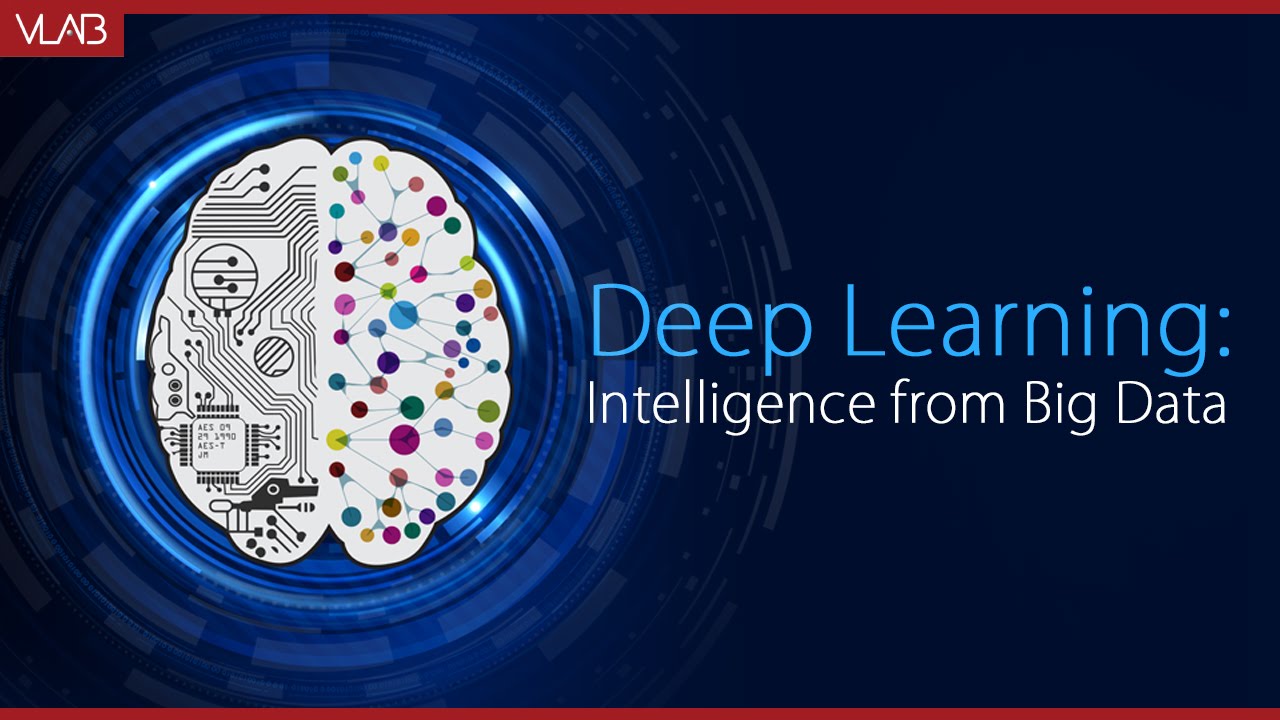
Deep Learning: Intelligence from Big Data
Tue Sep 16, 2014 6:00 pm - 8:30 pm
Stanford Graduate School of Business
Knight Management Center – Cemex Auditorium
641 Knight Way, Stanford, CA
A machine learning approach inspired by the human brain, Deep Learning is taking many industries by storm. Empowered by the latest generation of commodity computing, Deep Learning begins to derive significant value from Big Data. It has already radically improved the computer’s ability to recognize speech and identify objects in images, two fundamental hallmarks of human intelligence.
Industry giants such as Google, Facebook, and Baidu have acquired most of the dominant players in this space to improve their product offerings. At the same time, startup entrepreneurs are creating a new paradigm, Intelligence as a Service, by providing APIs that democratize access to Deep Learning algorithms. Join us on September 16, 2014 to learn more about this exciting new technology and be introduced to some of the new application domains, the business models, and the key players in this emerging field.
Moderator
Steve Jurvetson, Partner, DFJ Ventures
Panelists
Adam Berenzweig, Co-founder and CTO, Clarifai
Naveen Rao, Co-founder and CEO, Nervana Systems
Elliot Turner, Founder and CEO, AlchemyAPI
Ilya Sutskever, Research Scientist, Google Brain
Demo Companies**:
Clarifai | SkyMind | Ersatz Labs | AlchemyAPI
** Follow (@VLAB) on Twitter and Event Hashtag #VLABdl

I created this video overview of PBL for the teachers at my school. We implemented a new program in the elementary school that uses this effective teaching approach.
Here are some video examples of PBL projects we have done so far:
https://www.youtube.com/playli....st?list=PLYyk4fLjIwR
Update #1:
I also want to mention that the Kindergarten Driving Question was changed during the year. Instead we came up with, "How will you, as an engineer, create a Rube Goldberg machine?" It remains motivating and interesting, and requires core knowledge, but also easier to understand and a little more open-ended.
Additionally the PBL 101 Workbook is not available anymore. However you can find more PBL workbooks on the BIE.org site. https://shop.bie.org/store-c2.aspx
Update #2:
We have discarded the Kindergarten unit that used the example driving question shown in the video. We felt that it had a weak PBL scenario as well as a weak connection between the subject areas involved. Instead here are some driving questions we introduced to our students this year.
- How can we help our school become environmentally-friendly? (Kinder)
- How will you create a nature-inspired tool that can be used during a family activity? (1st Grade)
- How can you, as IDEO Toy Lab inventors, create a toy for kindergarten students? (2nd Grade)
- How can you develop a city plan that will improve the local community? (2nd Grade)
- How can we as architects, design a schoolhouse for a specific region? (3rd Grade)
- How can you as engineers design and create an “Apple” recording device for ELLs? (4th Grade)
- How will you prepare yourself to become a NASA Martian? (5th Grade)
- How will your team of game designers create a Breakout EDU game specifically for younger students? (5th Grade)
- How will you as environmental engineers, design, build and market a product that helps the environment? (5th Grade)
You can find videos that describe these PBL projects here:
https://www.youtube.com/playli....st?list=PLYyk4fLjIwR
OK GO’s music video: https://goo.gl/qwCSK
Buck Institute for Education website: www.bie.org
Flowchart of a PBL Project: https://goo.gl/tT4iGX
Essential Elements of PBL: http://bie.org/about/what_pbl
Essential Elements of PBL Checklist: http://goo.gl/9gLbcU

Learning with Passion and Enthusiasm releases dopamine, which means it works better and is more fun. Support our channel visit http://www.patreon.com/sprouts
Join us at www.patreon.com/sprouts
Sources:
Brain on Cocaine
https://archives.drugabuse.gov..../NIDA_Notes/NNVol13N
Dopamine and Learning
http://www.scilearn.com/blog/d....opamine-learning-bra
Learning Enthusiastically
http://www.gerald-huether.de/M....ediathek/english/Lea
Happiness in anticipation of something nice
http://www.dw.com/en/the-neuro....biology-of-christmas
Script:
Learning happens inside our brain when new information connects with existing memory. When we are excited or enthusiastic our brain happens to do that much better.
In a famous experiment American psychologist Hans Breiter put cocaine addicts into an MRI. The effect of the drug excited the addicts and the researcher saw a lot of activity in what’s called the Nucleus Accumbent. German scientists did the same experiment with young men and pictures of Porsche cars, which caused the same area to light up. When they did it with pictures of a Daihatsu.. it didn’t. What’s going on here?
As soon as we expect something nice to happen, the brain releases it's happiness chemicals dopamine and endorphin as well as other neurotransmitters. While dopamine and endorphin delight us, the other neurotransmitters send information from A to B. This connects new information from outside the brain with stored memories inside... and that’s learning.
Unfortunately this doesn’t mean that everything “fun” helps us learn. Shopping for example makes us happy, but as German Neuroscientists Manfred Spitzer measured, it only lasts 12 seconds. Then the dopamine level drops and we have to shop more to bring it back up.
This happens because the brain releases neurotransmitters in anticipation of something nice. But once we get it, the dopamine rush ends and the information exchange slows. Accumulating new things therefore doesn’t make us happy, nor does it help us to learn. Being excited about something for a longer time or being surprised does.
For example: When we are excited to plan a trip with our friends or when we have an unexpected and inspiring conversation with a stranger, our brain releases neurotransmitters in abundance and we start recording with all our senses in high definition. The synapses add existing footage from the long-term memory to make it a creative and memorable experience. It’s like we turn on a learn turbo.
Neuroscientist Prof. Dr. Hüther even argues that young children can learn multiple languages and so many other things, mainly because of their ability to be excited. And most are excited about everything until they get held back to follow their interest by the expectations of their parents or schools.
When learning a new language in a boring class at age 35 however, we have little left to be excited about and hence we learn next to nothing. Prof. Hüther believes any 75-year old Chinese man, who falls in love with a young 65-year old British lady, will speak English very fast.
If you are able to constantly learn new things in an exciting way, the chemicals released in your brain are likely to outlive the pleasures of drugs or shopping. It seems as if happiness and learning not only come from the same region in our brain, but they also promote one another.
What is your experience? Is learning a side product of enthusiasm? Or can we learn without passion or interest? Share your thoughts in the comment below!

After being forced to miss the entire 2019 playoffs due to an emergency appendectomy, OG Anunoby talked to Josh Lewenberg about the progress he has made to get back in game shape. Lewenberg also asked OG what he learned from Kawhi Leonard as a teammate and his experience attending Kobe Bryant's mini camp this summer.

The talks at the Deep Learning School on September 24/25, 2016 were amazing. I clipped out individual talks from the full live streams and provided links to each below in case that's useful for people who want to watch specific talks several times (like I do). Please check out the official website (http://www.bayareadlschool.org) and full live streams below.
Having read, watched, and presented deep learning material over the past few years, I have to say that this is one of the best collection of introductory deep learning talks I've yet encountered. Here are links to the individual talks and the full live streams for the two days:
1. Foundations of Deep Learning (Hugo Larochelle, Twitter) - https://youtu.be/zij_FTbJHsk
2. Deep Learning for Computer Vision (Andrej Karpathy, OpenAI) - https://youtu.be/u6aEYuemt0M
3. Deep Learning for Natural Language Processing (Richard Socher, Salesforce) - https://youtu.be/oGk1v1jQITw
4. TensorFlow Tutorial (Sherry Moore, Google Brain) - https://youtu.be/Ejec3ID_h0w
5. Foundations of Unsupervised Deep Learning (Ruslan Salakhutdinov, CMU) - https://youtu.be/rK6bchqeaN8
6. Nuts and Bolts of Applying Deep Learning (Andrew Ng) - https://youtu.be/F1ka6a13S9I
7. Deep Reinforcement Learning (John Schulman, OpenAI) - https://youtu.be/PtAIh9KSnjo
8. Theano Tutorial (Pascal Lamblin, MILA) - https://youtu.be/OU8I1oJ9HhI
9. Deep Learning for Speech Recognition (Adam Coates, Baidu) - https://youtu.be/g-sndkf7mCs
10. Torch Tutorial (Alex Wiltschko, Twitter) - https://youtu.be/L1sHcj3qDNc
11. Sequence to Sequence Deep Learning (Quoc Le, Google) - https://youtu.be/G5RY_SUJih4
12. Foundations and Challenges of Deep Learning (Yoshua Bengio) - https://youtu.be/11rsu_WwZTc
Full Day Live Streams:
Day 1: https://youtu.be/eyovmAtoUx0
Day 2: https://youtu.be/9dXiAecyJrY
Go to http://www.bayareadlschool.org for more information on the event, speaker bios, slides, etc. Huge thanks to the organizers (Shubho Sengupta et al) for making this event happen.
CONNECT:
- If you enjoyed this video, please subscribe to this channel.
- AI Podcast: https://lexfridman.com/ai/
- Show your support: https://www.patreon.com/lexfridman
- LinkedIn: https://www.linkedin.com/in/lexfridman
- Twitter: https://twitter.com/lexfridman
- Facebook: https://www.facebook.com/lexfridman
- Instagram: https://www.instagram.com/lexfridman
- Slack: https://deep-mit-slack.herokuapp.com
TensorFlow is an open source software library for numerical computation using data flow graphs. Originally developed by researchers and engineers working on the Google Brain Team within Google's Machine Intelligence research organization for the purposes of conducting machine learning and deep neural networks research. Learn more at http://tensorflow.org

In this talk, Niema Moshiri talks about his experience as a student in a massive classroom, and how this to his goal of rethinking education. As classroom sizes continue to increase, he illustrates the benefits of adaptive online education as a replacement for the traditional classroom.
Alexander Niema Moshiri is currently a Ph.D. student in the Bioinformatics and Systems Biology program at the University of California, San Diego. He works on computational biology, with a research focus on phylogenetics and phylogenomics. Aside from research, Niema places a heavy emphasis on teaching, namely on the development of online educational content, primarily Massive Adaptive Interactive Texts (MAITs). For the past few years, he has worked with Dr. Pavel Pevzner and Dr. Phillip Compeau in the development of the Bioinformatics Specialization Track on Coursera, and has separately co-authored a free online MAIT on Data Structures that is being used at UCSD and USD.
This talk was given at a TEDx event using the TED conference format but independently organized by a local community. Learn more at https://www.ted.com/tedx

Тюнинг ваз 2101
Смотрим оцениваем, пишем своё мнение!!!
Не забудь подписаться!
https://youtu.be/MaUuATHFoBo

Автосервис у Эрика. Станица Зольская. Ставропольский край .Все виды тюнинга
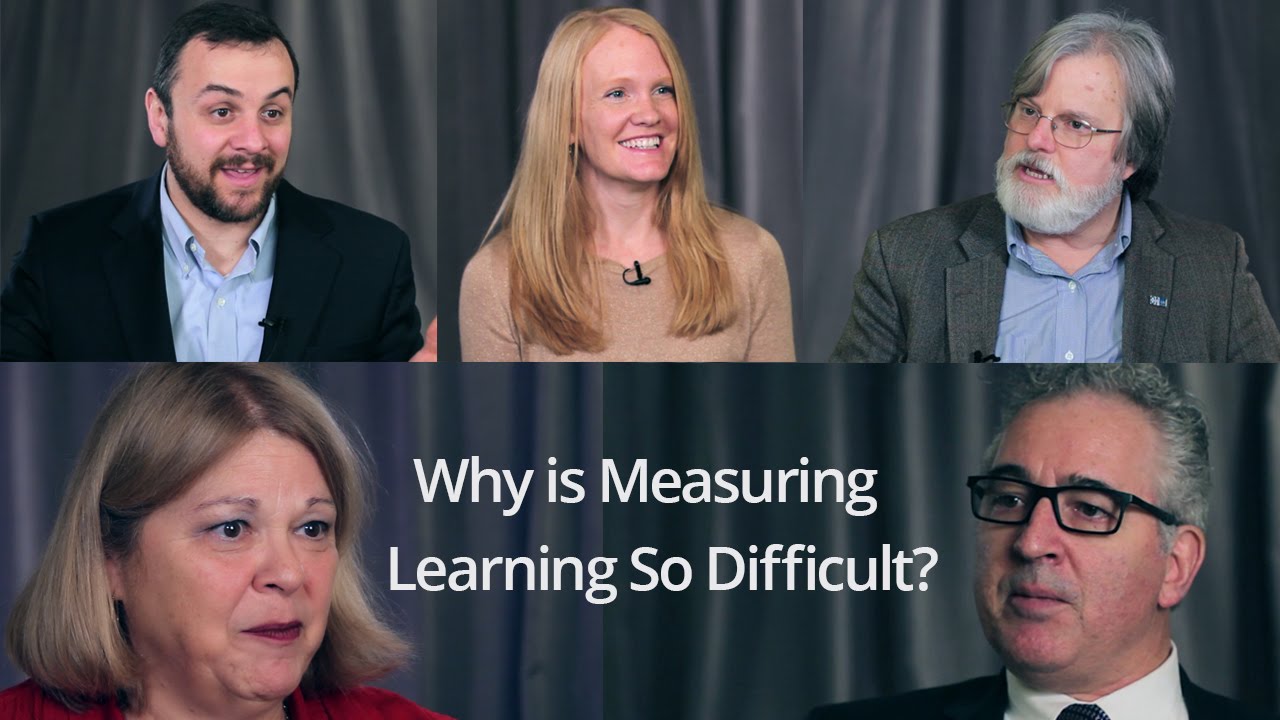
Several higher education learning and assessment professionals discuss the difficulties of measuring learning.

While few of us will ever take on the ambitious challenge of learning four foreign languages in a year, many of us yearn to be more proficient in another language. The secret to success as it turns out is simpler than you think.
Scott Young is a blogger, speaker and author. He previously spoke at TEDx EastsidePrep about his project “The MIT Challenge” to self-test MIT’s undergraduate computer science curriculum in one year, using their freely available information. His most recent project was with Vat Jaiswal, traveling to four countries, learning languages, with the goal of not speaking English for an entire year. He writes about learning and self-education at his website, ScottHYoung.com.
Vat Jaiswal is a graduate student, aspiring architect and filmmaker. His most recent project was with Scott Young on The Year Without English, where he traveled through Spain, Brazil, China, Taiwan and Korea creating four short documentaries on language learning and cultural immersion. He shares his work, including experimental time-lapse photography and an interview series with successful architects, at vatjaiswal.com
This talk was given at a TEDx event using the TED conference format but independently organized by a local community. Learn more at http://ted.com/tedx
#Reinforcement Learning Course by David Silver# Lecture 1: Introduction to Reinforcement Learning
#Slides and more info about the course: http://goo.gl/vUiyjq

To support us visit http://www.patreon.com/sprouts
The reason why we remember specific moments or movies is because they have been stored in our memory under the influence of emotions. When we win or fail, cry or celebrate, we learn fast, deep and plenty. But when we are afraid our brain limits our ability to think, for a good reason.
Fear is an emotion induced when we face a threat to our physical or psychological well being. It causes a change in brain and organ functions and ultimately in our behavior first we get stressed or aggressive, then we are left with three final ways out: freeze, fight or flight.
The reason for this is evolution. Over the last million years, we learn that when we meet a dangerous animal, we better freeze, fight or run and hide. To save our life this is now programmed in our genes. But something else happens.
When it gets dangerous a specific region of our brain, the Amygdala, takes over. Its job is to protect us and save our life. To act fast it refrains us from thinking and leaves us only with those three options. This makes creative and critical thought processes impossible.
High pressure triggers a similar response. In one experiment, German neuroscientist Prof. Dr. Huether measured the brain function of young men playing a car racing game. The race was on and the men eager to win. When the researchers later looked at the scans of the brain they saw shockingly little activity. In fact, the young men hardly used their brains at all and they certainly didnt remembered much.
Later the researchers repeated the experiment. This time they did not play the game themselves but just watched from inside the car sitting next to the driver. Instead of focusing to win, they focused on a lot of other things: driving behavior, the race track, other cars. This time the brains showed lots of activity Learning happened and memories were created.
The scientists concluded that when we panic at a math exam or when a salesmen fears to miss his monthly target, it can create a tunnel vision. Then our vision field becomes smaller, our learning limited and we cannot find the road to success.
Next time when you are stressed to perform or when you panic during an exam, try this quick fix. First slowly breath in through your nose. To do it slow enough, count from one to five. Then breath out through your mouth, again counting to five. Repeat that for 1-5 minutes and your body will relax and your brain can switch from protection back to a learning mode.
SOURCES:
Manfred Spitzer about Cocain & Porsche Car:
https://youtu.be/bv16azw2MVo?t=29m46s
http://www.gerald-huether.de/c....ontent/international
http://www.id-factory.de/NEWSL....ETTER/Hirnforschung-
https://en.wikipedia.org/wiki/....Fear_processing_in_t
http://www.stressstop.com/stre....ss-tips/articles/fig
https://www.welt.de/debatte/ko....mmentare/article1133
http://humanitiesinmedicine.org/manfred-spitzer/
https://www.youtube.com/watch?v=bv16azw2MVo
Learn to budget, beat debt, & build a legacy. Visit the online store today: https://goo.gl/GjPwhe
Subscribe to stay up to date with the latest videos: http://www.youtube.com/user/Da....veRamseyShow?sub_con
Welcome to The Dave Ramsey Show like you've never seen it before. The show live streams on YouTube M-F 2-5pm ET! Watch Dave live in studio every day and see behind-the-scenes action from Dave's producers. Watch video profiles of debt-free callers and see them call in live from Ramsey Solutions. During breaks, you'll see exclusive content from people like Rachel Cruze, and Chris Hogan, Christy Wright and Chris Brown —as well as all kinds of other video pieces that we'll unveil every day.
The Dave Ramsey Show channel will change the way you experience one of the most popular radio shows in the country!

Learning Thai language is easy! Start with the consonants.
Here is the video of writing Thai consonants.
Thai numbers:
http://www.youtube.com/watch?v=aXz7dZXmHL0
Learn more about Thailand, visit our page:
http://www.mthai.com/en/
Like our Facebook page:
https://www.facebook.com/mthaieng

This video explains the teaching methodology Inquiry-Based Learning. It was created for the Inspiring Science Education Project as part of a series of videos to promote the use of Inquiry-Based Learning.
http://inspiringscience.eu

Watch a quick demonstration of how to use MATLAB®, a simple webcam, and a deep neural network to identify objects in your surroundings.
This demo uses AlexNet, a pretrained deep convolutional neural network (CNN or ConvNet) that has been trained on over a million images.
Get the files used in this demo: https://goo.gl/uVyfrG
The example has two parts: setting up the camera and performing object recognition. The first part shows how to use the webcam command to acquire images from the camera. Using the drawnow command, MATLAB is able to continuously update and display images taken by the camera.
The second part illustrates how to download a pretrained deep neural network called AlexNet and use MATLAB to continuously process the camera images. AlexNet takes the image as input and provides a label for the object in the image. You can experiment with objects in your surroundings to see how accurate AlexNet is.
Today you can do this very easily with MATLAB, but even just a few years ago it would have been considered science fiction.

Produced by the Royal Society, more info can be found at https://royalsociety.org/topic....s-policy/projects/ma
Brian Edward Cox is physicist who serves as professor of particle physics in the School of Physics and Astronomy at the University of Manchester. He is best known to the public as the presenter of science programmes, especially the Wonders of... series and for popular science books, such as Why Does E=mc²? and The Quantum Universe. He has been the author or co-author of over 950 scientific publications.
Recorded: February 2017
In this poignant, funny follow-up to his fabled 2006 talk, Sir Ken Robinson makes the case for a radical shift from standardized schools to personalized learning -- creating conditions where kids' natural talents can flourish.
TEDTalks is a daily video podcast of the best talks and performances from the TED Conference, where the world's leading thinkers and doers give the talk of their lives in 18 minutes. TED stands for Technology, Entertainment, Design, and TEDTalks cover these topics as well as science, business, development and the arts. Closed captions and translated subtitles in a variety of languages are now available on TED.com, at http://www.ted.com/translate.
Follow us on Twitter
http://www.twitter.com/tednews
Checkout our Facebook page for TED exclusives
https://www.facebook.com/TED
Watch live at https://www.twitch.tv/lara6683
My Twitter: https://twitter.com/Larawithabird
Learn piano with flowkey! https://tinyurl.com/Lara-flowkey

This is the first video in a three part series exploring the concept of social learning.
-------------------------------------------
Fuse are fanatic innovators in knowledge sharing and learning experiences, who inspire and teach through creativity and storytelling. The Fuse platform enables organisations to transform knowledge into engaging and effective social learning experiences.
To learn more about the Fuse platform and other Fuse offerings visit http://www.fuseuniversal.com or contact hello@fuseuniversal.com
Subscribe to our YouTube and follow Fuse to keep up to date with the latest on learning technologies that revolutionise businesses:
Twitter: https://twitter.com/Fuseuniversal
Facebook: https://www.facebook.com/FusionUniversal
Google+: http://www.gplus.to/FuseUniversal
If you found the video useful please like and share!
Any questions on the video? Leave a comment below and we'll get straight back to you.

Through a mosaic of schoolwide strategies and practices focused on social-emotional learning, Symonds Elementary provides students with a safe, supportive space and ensures that students are ready and available for deeper learning.
Symonds Elementary
GRADES K-5 | KEENE, NH
Explore more resources from this school:
https://www.edutopia.org/schoo....l/symonds-elementary
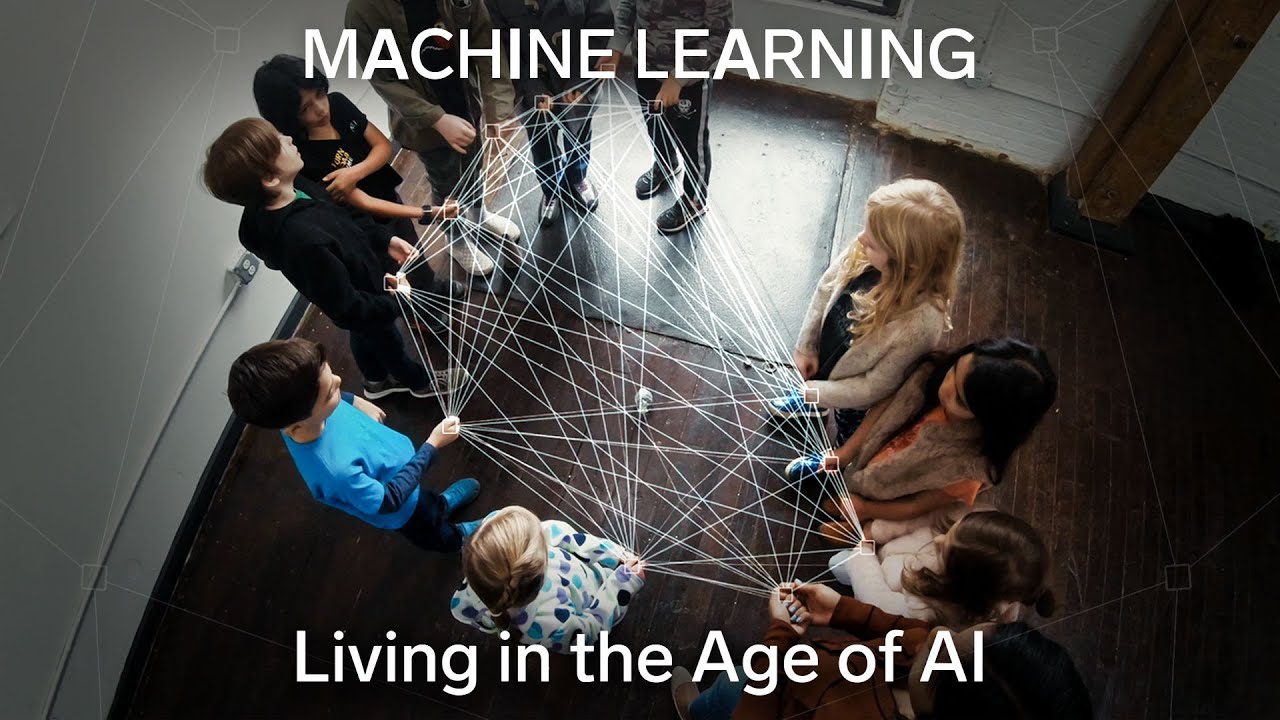
“Machine Learning: Living in the Age of AI,” examines the extraordinary ways in which people are interacting with AI today. Hobbyists and teenagers are now developing tech powered by machine learning and WIRED shows the impacts of AI on schoolchildren and farmers and senior citizens, as well as looking at the implications that rapidly accelerating technology can have. The film was directed by filmmaker Chris Cannucciari, produced by WIRED, and supported by McCann Worldgroup.
Still haven’t subscribed to WIRED on YouTube? ►► http://wrd.cm/15fP7B7
Also, check out the free WIRED channel on Roku, Apple TV, Amazon Fire TV, and Android TV. Here you can find your favorite WIRED shows and new episodes of our latest hit series Tradecraft.
ABOUT WIRED
WIRED is where tomorrow is realized. Through thought-provoking stories and videos, WIRED explores the future of business, innovation, and culture.
Machine Learning: Living in the Age of AI | A WIRED Film

Wow people watch people play games! Since when did this happen?
► Subscribe for more -- https://goo.gl/T2cieP
★ Connect With Tramah ★
►Twitter ----------------------- https://goo.gl/G97Ulw
►Facebook ------------------ https://goo.gl/PQdYOA
►Tramah.com ------------- http://goo.gl/6mui8y
Cool blonde journo gaming chick:
https://www.youtube.com/user/itsjuliahardy/
Joe Rogan Experience with Jordan Gilbert (c9n0thing)
https://www.youtube.com/watch?v=gPPFhL_g5Mo