Neueste Videos

I had complications after giving birth to my second child. This Vlog is in real time, documenting how I felt in the moment. I have a detailed blog about everything I went through on my website LifesSwell.com - The only place I found information about what I was going through was through a blog so I wanted to return the favor. Blog: http://lifesswell.com/?p=2915
SOCIAL MEDIA - I would love to connect with you! I read every comment and write back! Promise :)
SNAPCHAT:
@malikadudley
FACEBOOK:
facebook.com/malikadudley
INSTAGRAM:
instagram.com/malikadudley
TWITTER:
twitter.com/malikadudley
PINTEREST:
pinterest.com/malikadudley
BLOG:
LifesSwell.com
Mahalo for watching!!
SUBSCRIBE and "Like" this video if you want to see more :)
Business inquiries? Please email me at malikadudley@gmail.com
Медицинский Центр ''Наири''
www.spinesurgery.am
+37496601560
Метод чрескожной вертебропластики (заливка костным цементом пораженного тела позвонка) впервые был применен в 1984г., в университетской клинике г.Амьена (Франция). Это передовой метод, позволяющий восстановить двигательную функцию поврежденного тела позвонка, предотвратить перелом позвоночника и инвалидизацию больных. Применение чрескожной вертебропластики при переломе тела позвонка позволяет больному быстро выздороветь: в несколько раз сокращаются сроки госпитализации и послеоперационного восстановления, а также в десятки раз сокращается вероятность возможных осложнений. К примеру больные с компрессионным переломам после проведения вертебропластики выписывается из больницы уже на следующий день и возвращается к своему повседневному образу жизни спустя неделю.
Эта операция длительностью 30 минут: она проводится без разрезов, при помощи всего одной иглы. Мы используем костные цементы разной степени вязкости. При опухолях, до вертебропластики, можно провести радиочастотную абляцию опухоли, что способствует ее более полноценному уничтожению.
Применение чрескожной вертебропластики при опухолях тела позвонка (гемангиомы, метастазы) позволяет предотвратить его возможный перелом, а также избавляет больного от необходимости лучевой терапии. Чрезкожную вертебропластику можно провести под местной или эпидуральной анестезией, что позволяет больному встать на ноги и выписаться из стационара уже спустя несколько часов.

Dr. Reitzel describes the difference between epidural and intrathecal injections. For more information visit www.EmpowHER.com.

Want to support the channel? Be a patron at:
https://www.patreon.com/LYMED Welcome to LY Med, where I go over everything you need to know for the USMLE STEP 1, with new videos every day.
Follow along with First Aid, or with my notes which can be found here:
https://www.dropbox.com/sh/8uams03zbpcr333/AABmgSwTFPAhgsUqHKrmFyPIa?dl=0
*A mistake was made: I state malignant hypertension, but what I mean is malignant hyperTHERMIA.
Last video on neuro! This video will be on pharmacology, and we'll go over some pharm you'll see on the USMLE. We start with muscle relaxants like baclofen, which help with spasms. We then move on to drugs like barbiturates and benzodiazepines. These are drugs that work on your GABA channels. Barbiturates attach to the chloride channel of your GABA receptors and open it for longer, while benzos attach and open it more frequently. This potentiates GABA. We also discuss how to treat overdoses like flumazenil.
Bouncing to our next topic, hypnotics. These are sleeping aids and also work on GABA, albeit a different subtype.
Next topic: anesthesia. These are all drugs to help reduce our feeling of pain. Now there are many types of anesthesia. There are inhaled types, local types, and generalized. We will discuss the properties of these drugs and discuss pharmacology concepts like induction, solubility, potency, MAC (mean alveolar concentration), AV gradient, and blood gas coefficient.
After learning all those variables we move onto neuromuscular blocking agents. There are two types, non-depolarizing and depolarizing. Non-depolarizing drugs are competitive antagonist drugs and stop the depolarization of the neuromuscular junction. These drugs show tetanic fade. Depolarizing drugs are similar to acetylcholine, and they bind and cause a depolarization. However, it sits there and stops any subsequent depol. An important side effect to know is malignant hyperthermia which is condition that may be induced by anesthetics. The main cause may be due to mutated ryanodine receptors which release too much calcium and cause excess muscle contraction, cell death and hyperthermia. Treatment is with ryanodine receptor antagonists like dantrolene.
Our last topic is a quick talk on opioids. After that, we're all done! Thanks for hanging with me for the neuro block.

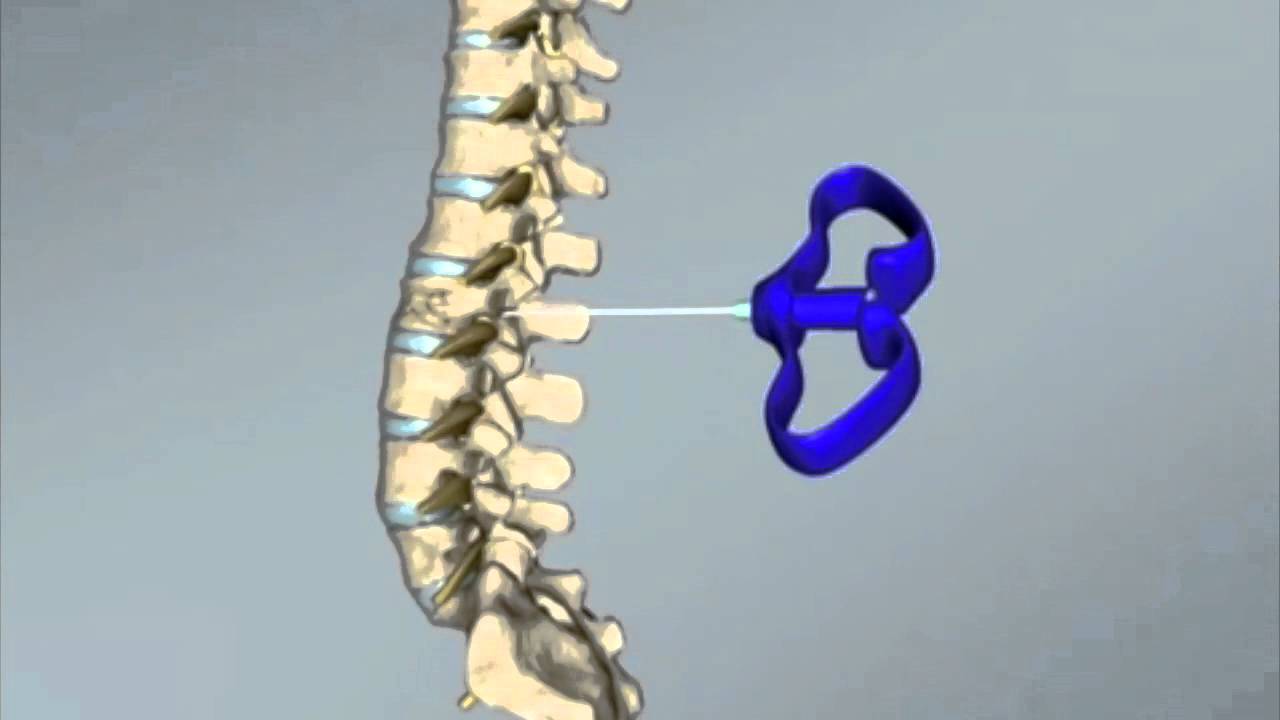
http://www.calshipleymd.com Animated review of technique of epidural anesthetic administration, as used in childbirth.

Роды в клинике ISIDA – это целый комплекс медицинских услуг на европейском уровне сервиса. Посмотрите видео о родах в клинике ISIDA и узнайте, в каких условиях, с точки зрения медицины и комфортности для мамы и малыша, происходит появление ребенка на свет.

A transforaminal injection is an injection of long acting steroid into the opening at the side of the spine where a nerve roots exits. This opening is known as a foramen. There is a small sleeve of the epidural space that extends out over the nerve root for a short distance.
If you are interested in an evaluation into the cause of your pain, or want to be evaluated for a transforaminal injection to help you manage your pain, please contact our pain management experts at The Spine and Pain Institute of New York. Our offices in Manhattan, Staten Island, Brooklyn, the Bronx and Long Island offer multiple convenient locations for you to be evaluated. We would be happy to make an appointment for a consultation and provide additional information about other treatment options.
Learn more at http://www.spinepainny.com or email Help@SpinePainNY.com for assistance.

Epidural Injections for Back Pain and Sciatica http://PainFreeInstitute.net
If you suffer from sciatica due to a herniated disc you may be introduced to epidural steroid injections (ESI) by your doctor. Epidural injections have become one of the most common procedures for low back pain associated with herniated discs and I often get asked if this is something that’s worth having done, how long it will last, and what are its side effects.
The best care is given when a patient is treated at a multi-disciplinary clinic where they can be co-managed by a chiropractor, physical therapist, medical doctor, etc. This gives the doctors a multi-dimensional approach to see what benefits the patient best.
A conservative approach should come first when treating herniated discs and sciatica because the vast majority of people will see great improvement within 6 weeks or less with a rehabilitation program that’s specific to the cause of their pain.
http://painfreeinstitute.net/do-epidural-injections-help-sciatica-and-herniated-discs/
When a disc herniates, it can put pressure on spinal nerves and cause sharp pain that travels down the leg(s), numbness, and tingling. Epidural injections are used because of their powerful anti-inflammatory properties believed to remove pressure off nerves.
During epidural cortisone injections, the needle is inserted past the skin into an area called the epidural space.
The doctor will be aided by the use of a video fluoroscopy machine which is a “live” x-ray, that allows him/her to see where the needle is being inserted.
For the most part, the effects of epidural injections are short-lived. Some people feel relief for a couple of months and others only feel relief for a few days. The results vary from person to person but for the vast majority of people these injections are NOT effective for permanent pain relief.
The upside is that ESI’s can give patients some relief so that they can get started on a comprehensive physical therapy program and resume everyday activities with less pain.
Epidural injections are minimally invasive procedures, however, there are risks involved and this is why it’s important to research and look for a medical professional with solid training in this procedure.
If your doctor recommends this procedure, it is wise to ask him/her for an informed consent form stating any complications that may occur from this procedure. This is the same form you will be signing before you agree to the injection.
One side effect I’ve seen is an increase in pain. Other complications may include nerve injury, or an infection but those are rare.
When treating herniated discs and sciatica, your doctor should start with a conservative approach. These treatments should include chiropractic, physical therapy, massage therapy, acupuncture, etc. For the majority of people these treatments will provide significant relief.
If your symptoms are still not improving after giving these treatments a trial, then epidural injections and pain relievers should be used. Although ESI’s are not a cure for herniated discs, they are less risky than undergoing back surgery.
Opioids such as Percocet and Lortab, can become highly addictive and when abused, can cause death. In 2014, more 28,000 people died due to an opioid overdose. When you compare conservative treatments and ESI’s to surgery and opioids, the benefits of going the conservative route outweigh the risks.
The bottom line is that you as the patient should be involved in making an informed decision about your health. You should ask your doctor questions and understand the treatment plan and options presented to you. Then go home and research some more.
Not everyone will need or benefit from epidural injections, but they may be helpful to reduce pain and inflammation so you can get back on your feet and start your way to recovery.
If you’re looking for a way to get rid of sciatica WITHOUT risky back surgery, painful injections, or addicting painkillers, make sure you check out our FREE online presentation, where you’ll learn the same 7 step process we use to treat sciatica naturally http://SciaticaWebinar.com
If you like my bean bag chair, you can get one for yourself at http://SumoLounge.com
For the best exercises for sciatica click here https://www.youtube.com/watch?v=YfWIRyGbxSA
Connect with me on Facebook:
http://Facebook.com/AtlantaChiropractor
Chat with me on Twitter:
http://Twitter.com/DrJoseGuevara
Follow me on Instagram:
http://Instagram.com/DrJoseGuevara
Subscribe to my YouTube channel:
http://www.youtube.com/user/drjoseguevara
Read about natural sciatica treatments at my blog:
http://painfreeinstitute.net/blog
https://www.youtube.com/watch?v=BTb-VLemMEU
https://www.youtube.com/watch?v=_xKZWHmc4Fw
Epidural Injections for Back Pain and Sciatica - Cortisone Steroid Shots for Herniated Discs

All patients are assessed pre-operatively to establish the safest and most appropriate anaesthetic technique for each individual. Your anaesthetist will discuss the clinical benefits of any techniques with you before you go to theatre.
There are two main types of anaesthesia that can be used for a total hip replacement: GENERAL ANAESTHESIA and REGIONAL ANAESTHESIA.
This video goes into more detail about these Anaesthetic options. There is further information in the downloadable document below.

А вышла замуж 14 лет она действительно в Богом установленное время, посему и здорова и молода потому, что от родов молодеют.
В древности или средние века, например, женщина, не родившая ребенка до 20 лет, считалась безнадежно старой для материнства.
Что женщина не может сама родит, без помощи врача тяжело и не может.
Здоровые женщины способны рожать ребенка, естественным путем.
Роды – процесс двусторонний, в котором участвует как мама, так и ребенок.
Сама природа дает знать, что у женщины состояния со здоровьем не хорошо, и воды раньше срока отходят дольше обычной срока носит ребенка. Делаем по Божьему получаем подарок, делаем против природы - что женщина имеет проблемы в себе.
Болезни в основном по причине невежества народа!
Около 20% женщин рожают без болезненна и многие женщины решается, на помощь анальгезия и эпидуральной анестезии, чтобы роды становились безболезненны, им мало силы, чтобы изгнание плода, самостоятельно родит ребенка без помощи врача, сильная боль утомляют роженицы, ослабленной ее родовой деятельность и вызывает окситоцин плода.
Окситоцин является гормоном гипоталамуса — органа высшей регуляции всей эндокринной системы. При этом немногие знают, что в особом отделе головного мозга, гипоталамусе, вырабатывается гормон окситоцин.
Гормон окситоцин является веществом, которое защищает от супружеской неверности. У врачей есть гормоны из вне для пациента различные виды препараты, и если манипуляция не удается, то приходится им делать кесарево сечение чтобы извлечь ребёнка!
По церковной традиции 16 последний шанс выйти замуж за кого лишь бы взяли ее.15-16 лет засидевшаяся 16-18 лет - перестарка. С 18 лет - старая дева. Нет здоровья нет, чтобы рожать без помощи медицины они по женские больны, так как не родили первого ребенка вовремя нуждаются в роддомах.

There are three stages during labor and the first stage is the time while a mom is dilating to 10. The second stage is from the time a mother is 10 centimeters until the time the baby is born, so basically the pushing time. The third stage is from delivery of the baby to the delivery of the placenta. You had a specific question about the second stage, about pushing, and if laughing gas is helpful. In order to answer your question I want to talk a little bit about the background of pushing. There is a lot that goes into it. If it's your first baby you're likely to push for one to two hours even though you might be able to see just a small amount of your baby's head when you start the process. It's similar to a basket weave of elastics, and imagine that a bowling bowl is sitting on top of that. You can see that a lot of weight and pressure would have to be applied on those elastics until eventually they're able to stretch and the bowling ball can come through. That's exactly what is happening with the baby's head and the muscles on your pelvic floor. They have to be stretched in order for the baby to fit through the birth canal. The baby has already descended quite a bit into the pelvis, in addition to the actual pushing when you have a contraction helps to add that pressure so the baby can fit. The best way for the stretching to occur is for the mother to push three times with each contraction using the force of the contraction and her pushing to stretch the tissues and get the baby out. You push for ten seconds during each push and you do this three times with each contraction every two to three minutes for one to two hours. You can see how this can be very, very exhausting. If you're desiring an un-medicated delivery during this time you have immense amounts of pressure and that urge to push is huge. That's actually a little bit beneficial because when you feel that contraction and that urge to push you're able to push in the right place and push for effectively than some women who have an epidural when they don't really feel where to push. Although there are benefits to having an epidural when you push as well because at the very end when the doctor tells you to just do little slow puffy pushes you're able to control it if you have an epidural, whereas if you don't you're not able to control that and the likelihood of you tearing is way greater. From all the labors I've observed and from having babies myself, the pushing stage is very difficult and can be very painful. It's exhausting. Laughing gas for this stage of labor is not typically used in practice right now. I have heard of some areas where it's being experimented upon. The problem with laughing gas is this goes into your blood stream and this can affect your baby. The studies are being done to figure out what effect it's having on the baby because when the baby is born we want them to come out screaming so that we don't have to entice them to cry or to scream because that's going to be best for them. We want them to come out and scream and get the circulation going through their body, that's what is best for them. Typically speaking we use two things as far as pain goes for labor. You can have IV pain medication, although that does affect your baby so we try to hold off if we think you're going to deliver in the next hour or two. There are also epidurals. The beauty of an epidural and your baby doesn't know you have it; it doesn't affect them at all. The safest form of pain control for your baby is actually an epidural. If you plan on not wanting to use any sort of anesthesia or pain medication during your labor it's best to start preparing now. If you decide the day before you go into labor that you want to do it un-medicated it's like deciding today that I'm going to run a marathon tomorrow, it's not likely to go well. If you practice basic breathing and relaxation techniques and look into things like hypnobirthing, Lamaze, there are many different things out there you can study that help you with an un-medicated delivery. The bottom line is you have to be prepared. That preparation will also help you during the pushing stage. Of course the staff at the hospital will be there to help you as well. Good luck with everything and if you have any other questions in the future feel free to ask them on our Facebook page at Facebook.com/IntermountainMoms and recommend us to your friends and family too.

An epidural steroid injection (ESI) is a minimally invasive procedure that can help relieve neck, arm, back, and leg pain caused by inflamed spinal nerves due to spinal stenosis or disc herniation. Medicines are delivered to the epidural space, which is a fat-filled area between the bone and the protective sac of the spinal nerves. Pain relief may last for several days or even years. The goal is to reduce pain so that you may resume normal activities and a physical therapy program.

✅ Все что Вы хотели знать про наркоз !!!
✅ Instagram @edgar_kaminskyi
✅ Запись прямой трансляции @edgar_kaminskyi
✅ Данные этапы введения и выведения из наркоза одинаковы при всех операциях
▪️Пациентка дала согласие на видеосъёмку
▪️Пациент может отказаться от Прямой трансляции в Periscope

Как проводится реанимация животных при остановке сердца?
В данном видео раскрыта следующая информация:
- основные три этапа реанимационных мероприятий
Пройдя по ссылке, Вы сможете ознакомиться с нашими статьями на данную тему:
Раздел Анестезиология
http://alisavet.ru/anesteziologiya.html
Так же Вы можете посмотреть видео на данную тематику:
Общая анестезия при стерилизации кошки
https://www.facebook.com/AlisaVet500/videos/414577365646818/
Присоединяйтесь к нам в социальных сетях!
В наших группах мы делимся своими знаниями и опытом, публикуем интересные статьи, показываем видео и фото наших пациентов и рассказываем о различных клинических случаях!
Instagram
https://www.instagram.com/alisa_vet/
ВКонтакте
https://vk.com/alisa_vet
Facebook
https://www.facebook.com/alisavet.ru/
Одноклассники
https://ok.ru/alisavet
Читайте интересные и полезные статьи на нашем сайте
(внизу на главной странице):
http://alisavet.ru
Будьте всегда в курсе наших Акций:
http://alisavet.ru/aktsii.html
http://butovo.alisavet.ru/aktsii.html
Здесь Вы можете познакомиться с нашим коллективом:
http://alisavet.ru/nash-kollektiv.html
http://butovo.alisavet.ru/nash-kollektiv.html
Контакты для связи:
+7 (800) 555-95-13 (единый номер сети клиник «Алисавет»)
+7 (495) 995-78-11 (филиал на ул. Лобачевского, д.100)
+7 (495) 989-14-77 (филиал на аллее Витте, д.2)
Мы будем благодарны, если Вы поделитесь этим видео с Вашими друзьями и знакомыми!

Sedating turtle and tortoises can be challenging. Here Dr. Stephen Divers discusses anesthesia in chelonians using a drug that is on its way to being approved for use in the United States.

Лиса Сайкс (Lisa Sykes) – спикер Первого международного он-лайн Фестиваля по естественным родам "Чудо в Сердце: Ждем.Рождаем.Познаем." (7-21 декабря 2014). Весь Фестиваль-2014 на сайте ProEstRo.com - http://proestro.com/festival-2014.
Тема вебинара: "Европейская сеть Доул: особенности деятельности Доулы в Европе".
Вебинар Лисы Сайкс (Швейцария) освещает деятельность активно действующей организации – Европейской сети доул. Сеть объединяет доульские организации и обучающие программы Европы, способствует поиску доул в странах Европейского Союза. Указывается, что большое внимание уделяется культурным особенностям конкретной страны – обучение доул обязательно базируется на местных традициях. Отдельно оговариваются планы организации по оказании помощи в заключении международных соглашений о взаимном признании сертификатов.
В данном вебинаре спикер раскрывает такие понятия, как:
+ «ключевые профессиональные качества» мудрой доулы.
Также дается подробное разъяснение:
+ Как происходят встречи с целью обмена информацией.
+ Каково содержание основных целей организации.
+ Какие применяются формы распространения информации о деятельности организации.
Скачать презентацию этого вебинара можно здесь: http://proestro.com/wp-content/uploads/2014/12/PDF-Lisa-EDN1.pdf
Получить беzплатно доступ к 100+ вебинарам (в том числе и на все вебинары Фестиваля-2014) от 120+ экспертов нашего социального проекта "чудо в Сердце" можно здесь http://proestro.com/subscribe.
Лиса Сайкс (Lisa Sykes)
Лозанна и Женева, Швейцария.
Мама 3-х детей (1 рожден дома), сертифицированная профессиональная доула Великобритании (признана организацией «Доулы Великобритании» doula.org.uk как доула по родам), является членом команды тренеров организации «Развитие Доул» birthpositively.co.uk, преподавателем проекта «Спокойный ребенок» babycalm.co.uk, основателем Движения Позитивных Родов positivebirthmovement.org, являлась со-председателем Комитета по связям для нужд материнства в Калдердейл и Хаддерсфильде yourmslc.org.uk, член Европейской сети доул european-doula-network.org , является консультантом по грудному вскармливанию Ассоциации Кормящих Матерей Великобритании abm.me.uk .
Лиса сопровождает роды на дому, в больнице, вагинальные роды после Кесарева сечения (на дому и в больнице), роды со стимуляцией, Кесаревым сечением, преждевременные роды и роды с эпидуральной анестезией.
Обучалась у таких признанных в мире специалистов, как Мишель Оден (Michel Odent), Патрик Хаузер (Patrick Houser), Наоми Стэдлен (Naomi Stadlen) и Оливер Джеймс (Oliver James).
Персональный сайт: lisasykes.com
Lisa Sykes is a Speaker of the First International Online Festival on Natural Birth 'Miracle in the Heart: Expecting.Giving Birth.Cognizing.' (December 7-21,2014).
Theme of the webinar: European Doula Network (EDN): 'Peculiarities of the European Doula's activities'.
Lisa Sykes
Geneva, Losanna, Switzerland.
Mother of 3 children, the UK and Switzerland Professional doula (fully recognised Doula UK birth doula) and trained with Developing Doulas, member of the European Doula Network, a Breastfeeding Mother Supporter with the Association of Breastfeeding Mothers, founder of the PosititveBirthMovement
Personal website: www.lisasykes.com

Introducer: Emy Chen, PhD, Director, Licensing, Innovation, PHS
Moderator: James Rathmell, MD, Chair, Department of Anesthesiology, Perioperative and Pain Medicine, BWH; Leroy D. Vandam Professor of Anaesthesia, HMS
Moderator: Jeanine Wiener-Kronish, MD, Anesthetist-in-Chief, MGH; Henry Isasiah Dorr Professor of Research and Teaching in Anaesthetics and Anaesthesia, HMS
Christopher Connor, MD, PhD, Member of the Faculty of Anaesthesia, BWH; Assistant Professor, Anesthesiology, HMS
William Driscoll, Director, Perioperative Clinical Engineering and IT Systems, MGH
Dusan Hanidziar, MD, PhD, Anesthesiologist and Intensivist, MGH
James Philip, MD, Anesthesiologist and Director of Clinical Bioengineering, Department of Anesthesiology, Perioperative and Pain Medicine, BWH; Professor of Anaesthesia, HMS
Kyan Safavi, MD, Critical Care Fellow, MGH
Anesthesiology is a major element of the in-patient environment and AI implementation in it has the potential of far reaching effects. This session will address how AI will impact anesthesiology in the near and long term.

George had severe back pain. The pain was so bad that it dropped him to his knees. The back pain was radiating down his back and into the anterior portion of his hips and groin. The pain was hindering every day activities for George. He heard that Arlington Orthopedic Associates (AOA) had the best surgeons in Texas, so he went for help. Dr. Troy Foster did an MRI of his back and was able to see that he had multiple levels of degenerative disks disease and Facet Hypertrophy or arthritis. With a pinched nerve in his back, he decided to proceed lumbar epidural steroid injections. Immediately George's back pain was relieved. Thanks to Dr Foster and AOA, he now can spend more time with his family and friends.

Epidural Injection for Back Pain & Sciatica (Herniated Disc)
To treat herniated discs and sciatica naturally, watch my videos or pick up one of our programs at https://PainFreeInstitute.net
If you're suffering from a herniated disc and it's causing sharp pain or sciatica (pain going down the leg) then your doctor may recommend epidural injections to decrease the pain and bring down inflammation.
I made this video to help people understand the purpose of epidural injections and to get a behind the scenes look at the actual procedure since a lot of people are fearful of an injection close to their spine.
The procedure takes less than a minute and the patient feels minor discomfort due to the fact that a local anesthetic is used to numb the injection site and once done, the patient can go home the same day.
First things first, epidural injections WILL NOT heal a herniated disc. They are used to bring down inflammation in case a person is in severe pain or can't function properly.
Epidural injections may bring relief for a week or sometimes even months. People will respond to them differently and if you do get relief, most of the time it is temporary.
If the injection does help to decrease your back pain and/or sciatica, then that is the perfect time to start an exercise and rehabilitation program to strengthen your low back and rehab your discs.
It's not recommended to get more than 3 epidural injections a year or they may cause side effects such as osteoporosis.
=================================
Subscribe to my YouTube channel:
https://www.youtube.com/user/drjoseguevara
Become a fan on Facebook:
http://www.facebook.com/AtlantaChiropractor
Follow me on Twitter:
http://www.twitter.com/drjoseguevara
Follow me on Instagram:
http://www.Instagram.com/drjoseguevara
Visit my blog:
https://painfreeinstitute.net/epidural-injection-back-pain-sciatica/
=================================
https://www.youtube.com/watch?v=_xKZWHmc4Fw
Epidural Injection for Back Pain & Sciatica (Herniated Disc)
What is Anesthesia Types of Anesthesia And How does it Work Education Terminology.
Anesthesia is a way to control pain during a surgery or procedure by using medicine called anesthetics.
It can help control your breathing, blood pressure, blood flow, and heart rate and rhythm.
Anesthesia may be used to:
Relax you.
Block pain.
Make you sleepy or forgetful.
Make you unconscious for your surgery.
Other medicines may be used along with anesthesia, such as ones to help you relax or to reverse the effects of anesthesia.
Local anesthesia numbs a small part of the body for minor procedures. For example, you may get a shot of medicine directly into the surgical area to block pain. You may stay awake during the procedure.
Regional anesthesia blocks pain to a larger part of your body. You may also get medicine to help you relax or sleep. Types of regional anesthesia include:
Peripheral nerve blocks: This is a shot of anesthetic to block pain around a specific nerve or group of nerves. Blocks are often used for procedures on the hands, arms, feet, legs, or face.
Epidural and spinal anesthesia: This is a shot of anesthetic near the spinal cord and the nerves that connect to it. It blocks pain from an entire region of the body, such as the belly, hips, or legs.
General anesthesia affects your brain and the rest of your body. You may get some anesthetics through a vein (intravenously, or IV), and you may breathe in some anesthetics. With general anesthesia, you're unconscious and you don't feel pain during the surgery.
.......
Our Mantra:
Information is Opportunity.
Knowledge is Power.
Be Informed - Be Powerful!
SUPPORT US:
SUBSCRIBE / LIKE / SHARE / COMMENT :)
Subscribe Link: https://goo.gl/qbyzFb
.......
CONNECT US:
Website: http://www.simplyinfo.net
Facebook: https://www.facebook.com/SimplyInfo.net
Twitter: https://twitter.com/SimplyInfo9
YouTube: https://www.youtube.com/c/SimplyInfo9
Slideshare: https://www.slideshare.net/SimplyInfo9
Pinterest: https://in.pinterest.com/SimplyInfo9/
Instagram: https://www.instagram.com/simplyinfo9/
YouTube Subscribe Link: https://goo.gl/qbyzFb
.......
OTHER PLAYLISTS TO EXPLORE:
Games & Sports: https://goo.gl/uTXRWB
Jobs & Career Info: https://goo.gl/cbCDXy
Business Management: https://goo.gl/1sDjfW
Information Technology: https://goo.gl/nWYpK8
Physics Concepts: https://goo.gl/FnLmes
Education & Learning: https://goo.gl/54TR8A
Filmmaking Concepts: https://goo.gl/RQL5qn
Psychology Concepts: https://goo.gl/oYNNKA
Indian Law Concepts: https://goo.gl/m98pWn
Economics Concepts: https://goo.gl/yymX98
.......
About Simplyinfo.net:
We provide the best info bytes videos in a very simple and effective way to learn, to revise and to master micro-content information. We simplify information in a wide variety of categories.
Contact Us: simplyinfo9@gmail.com
Be Blessed with Love, Health & Happiness.
Cheers & Have Fun :)
Team SimplyInfo.net
P.S. CLICK BELOW LINK TO SUBSCRIBE FOR UPDATES.
SUBSCRIBE LINK: https://goo.gl/qbyzFb

Биро йорк девочка рожает щенков, помощь при родах собаке, роды маленькой собаки, щенки йоркширского терьера, цветной йорк, шоколадный йоркширский терьер, рожаем дома.

It sounds like you're going to be induced in a couple of weeks and first of all, congratulations on that, that's so exciting. You have some really good questions. Is it going to hurt worse if you're induced? When can you get the epidural? In order to explain how it's going to feel during labor let's talk about the natural progression of things if you're not induced first. Up to the days and weeks before delivery your body starts to release hormones called prostaglandins that act on your cervix that actually ripen and prepare it for labor, very similar to how a fruit ripens. If you take a cervix that's not ripe and ready for labor it usually won't start to dilate or change or do much even if you have regular contractions. Your body starts to do some prep work leading up to the time of the delivery and then if you spontaneously go into labor your brain is releasing a hormone called oxytocin that acts on the little cells of your uterus and tells them to the contract. Then you start to have regular and intense contractions and that leads to cervical dilation and ultimately delivery. If you're coming to the hospital for an elective induction then your body has already done that prep work, it's already ripe and ready. All we have to do is start an IV, put Pitocin in your IV, Pitocin and oxytocin are the same thing, your body doesn't perceive a different between the two, and it causes your uterus to contract. Ultimately those contractions get more intense and more frequent leading to cervical dilation and delivery. A lot of people are afraid of Pitocin because they've heard that it hurts more than spontaneous labor. Actually it doesn't hurt more it just hurts faster. What I mean by that is if you go into spontaneous labor there is a nice curve. You start with very irregular uncomfortable contractions and you work your way up slowly to the ones that are every two to three minutes and really, really intense. Pitocin just takes the beginning stages out of that and you go from 0 to 60 faster and your body doesn't have time to acclimate to the pain. The perception is that it hurts more but ultimately whether it's spontaneous labor or induced labor it's going to hurt just the same in the end, contractions need to be every two to three minutes and be intense enough to get your cervix changing. Some people do say yes, Pitocin makes you hurt more but if you're planning on an epidural you don't really have to worry about that. The beauty of an epidural is that it takes pain away, not pressure sensation, you might still feel pressure but you won't feel pain. You can get it as long as you're having regular contractions. They don't need to be super intense. I always tells my patients the right time to get an epidural is about the time when you feel like you would take a Tylenol for a headache. We ask you a lot at the hospital on a scale from 0 to 10 if a 10 is surgery with no anesthesia. Maybe you're a four or a five if you have a headache and you're deciding if you want to take some Tylenol so it's not going to get worse, that would be about the right time to get an epidural. There have been lots of studies done to prove that epidurals slow labor down and there are lots of studies out there that show that labor speeds it up, it depends on the circumstances. In real practice I've probably seen more instances where epidurals speed labor up. It's really not going to slow you down as long as you're having good, regular contractions. If we gave you an epidural the second you walked in the door and that was the first thing we did to you and we started Pitocin after, we would have a hard time getting your body started. The best thing to do is wait until you've been on Pitocin for a little while, you're hurting just a little bit about to the point where you take a Tylenol for a headache, then you should be just fine. Your labor should progress nicely. Of course your doctors and nurses are going to be there to help you and answer any questions you have. I hope the very best for you and congratulations ahead of time. If you have any other questions for me in the future feel free to ask them on our Facebook page at Facebook.com/IntermountainMoms and recommend us to your friends and family too.

Watch more Pregnancy 101 videos: http://www.howcast.com/videos/501222-Epidural-Pros-and-Cons-Pregnancy
So, some of the pros and cons to an epidural.
The main thing to think about when choosing to have an epidural is when you're going to have the epidural. You really don't want to have an epidural too early in labor because sometimes labor progress is slowed down.
You want to think about the epidural as another tool in your tool box. You're bringing in all kinds of tools with you and the epidural is another tool that can be offered to you for pain management. It can really help an exhausted mother sleep if she's been laboring for a really long time and she just needs another tool to help her relax and get some rest.
Some of the cons to choosing an epidural are that it can sometimes slow down your labor because it inhibits your movement. Once you have an epidural, you are pretty much tied to the bed, meaning that you can't have a lot of movement. You can't get up and walk around.
When doctors or anesthesiologists talk about the walking epidural, the reality is you're really not walking or moving about. You might have more flexibility and movement in your legs but your legs won't be strong enough to support you and sustain standing movement.
Another con to choosing an epidural in birth is that sometimes it can lead to a greater increase in Cesarean or other interventions such as forceps or vacuum delivery. A lot of this has to do with the fact that you're not moving during labor. Labor is a lot about the movement and the rhythm you find in your body.
About one out of five women who choose an epidural suffer from long term back aches.
One of the things you should know about choosing to have an epidural is that you wouldn't be allowed to get up out of the bed to release your bladder. So you'd have to use a bedpan in the bed or have a catheter empty your bladder.
When you choose to have an epidural, you should also be mindful of the fact that epidurals can sometimes cause fevers, itching, and nausea. Sometimes shaking, intense shaking, and trembling is a also a big side effect to having an epidural.
These are things to keep in mind when making this choice for pain management.
Another side effect to having an epidural is the length of time for pushing your baby out and delivering your baby is sometimes elongated. One of the things to keep in mind when choosing an epidural is that it can often increase the length of time for pushing since you often have a decrease in sensation or feeling of the urge to push.
What you want to keep in mind when laboring or pushing with an epidural is you want to do what's called laboring down. If you don't feel that urge to push because you have an epidural, you want to wait for the baby to come down as far as possible, until you really feel an urge to push.
Then you'll know that the time to deliver your baby is near.

http://pixvid.me/mdbonedocsLumbarInjections Epidural injections are a non-surgical treatment option for low back (lumbar) pain and pain radiating into the legs. The procedure involves delivering pain relieving medications directly to or near the source of the pain in the spine during a short outpatient procedure. Epidural injections can be very effective for some people and may be repeated over time. For some, physical rehabilitation is possible once the pain has been relieved.